

Stuck in the Middle
Liberty X, cricket songs, and Cockney rhyming slang. Plus: Aristotle's Poetics and your story's saggy middle...

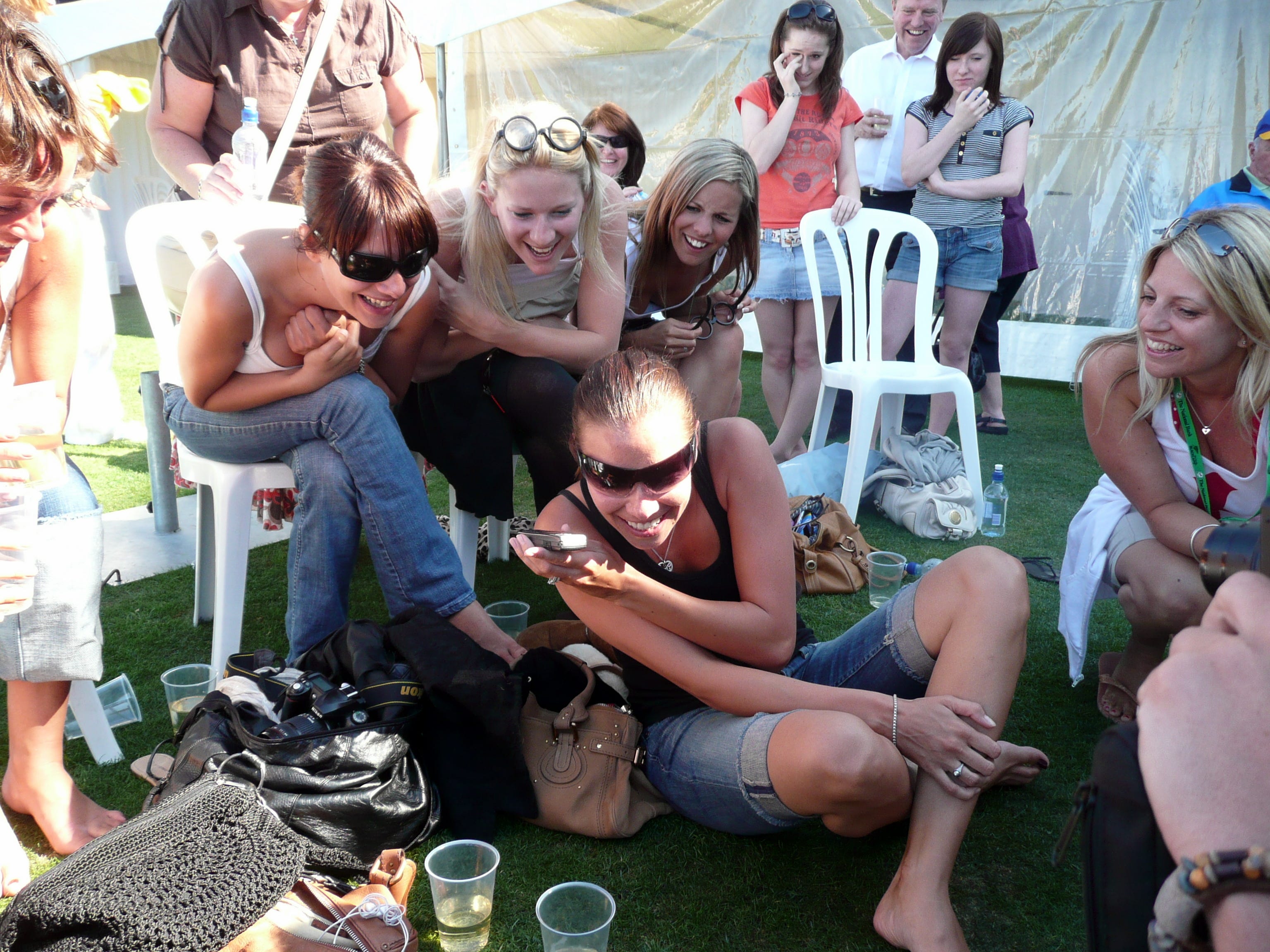
I was explaining to Jessica Taylor, the pop star and erstwhile member of Liberty X, how I came to write a song about her husband, the England cricketer Kevin Pietersen, when she interrupted me to protest that said husband did not, in fact, have a large bottom, which took me aback a little.
We were further interrupted when my friend JV called to sing to Jessica a song he had written about her husband. JV’s lyrical masterpiece trumped my own efforts by virtue of being set to the tune of Jessica and Liberty X’s biggest hit, Just A Little, which reached number one in the UK in May 2002.
I had unwisely chosen to set my lyrics to the tune of Start Wearing Purple by the band Gogol Bordello, who at the time were indisputably the best New York-based Eastern European gypsy punk rock band in the world. They might still be, I don’t know, I don’t follow music as closely as I once did.
Anyway, once JV had finished stunning Jessica with his rendition (“Hook! just a little bit, Pull! just a little bit, Drive! Just a little bit…), she turned back to me to resume our discussion about the size of her husband’s bum. It turns out they had misheard the lyrics, which had been belted out repeatedly and enthusiastically by the Barmy Army for the last few days in Napier, New Zealand as Pietersen batted and fielded his way to victory with the England cricket team.
The Barmy Army is the rather vocal fan group that supports the England team on every overseas tour. Songs are the staple of that support, be they witty and sophisticated, or just plain silly. The main thing is that they show the undying support of the fans for the players.
Which is why I was worried about discussing my own composition with the wife of the team’s best batsman. You see, I’d included a line that went “His ego’s bigger than his batting.” It was a friendly dig at Pietersen’s reputation for being, well, a big-head.
But it wasn’t the size of his head Jessica was chiding me over, it was the size of his butt. They’d misheard the lyric as “His ego’s bigger than his batty,” Jamaican patois slang for the bottom, the butt, the arse.
Or the arris, as we used to say when I was a kid. I had always thought arris was simply a variant of arse, a deliberate mispronunciation. But it turns out to be a complicated example of Cockney rhyming slang. Aris (not arris, as I had thought) is short for Aristotle, which rhymes with bottle. Bottle and glass is Cockney rhyming slang for… arse.
All of which is the most convoluted way I could come up with to talk about Aristotle. Or, more particularly, Aristotle’s thoughts on the three act structure from his Poetics, in which he posited that a complete story must have a beginning, middle, and end.
I raise this now because a discussion came up with Caversham Writers this week concerning a story’s middle section in particular.
Our writer already had a beginning and an end planned out, but was concerned about the middle section, which in turn got me thinking about what the middle section actually is.
In a sense, it’s the entire story. Or, at least, the reason why we have a story worth telling in the first place. The example I came up with is that most incidents have a beginning (‘something happened’, the inciting incident) and an end (‘fixed it’) but if nothing happened in between there’s no story. The lightbulb blew. I replaced it. So what? Would you bother telling that one down the pub? But what if you searched the whole house for a spare bulb, drove for hours in traffic to the DIY store, got misdirected by an idiot shopworker, the car broke down on the way home and when you got home you couldn’t break open the packaging so went into the kitchen drawer for a knife to cut it open… and found the spare bulb was there all along. Now you have a story. It’s all in the middle.
If Aristotle’s Poetics contains one of the first (if not the first) treatises on narrative structure, it was certainly not the last.
In John Yorke’s excellent Into The Woods: How Stories Work and Why We Tell Them, the author writes about a unifying shape to narrative forms and produces the following remarkable chart depicting a variety of academic theories on story structure, and how they overlap.
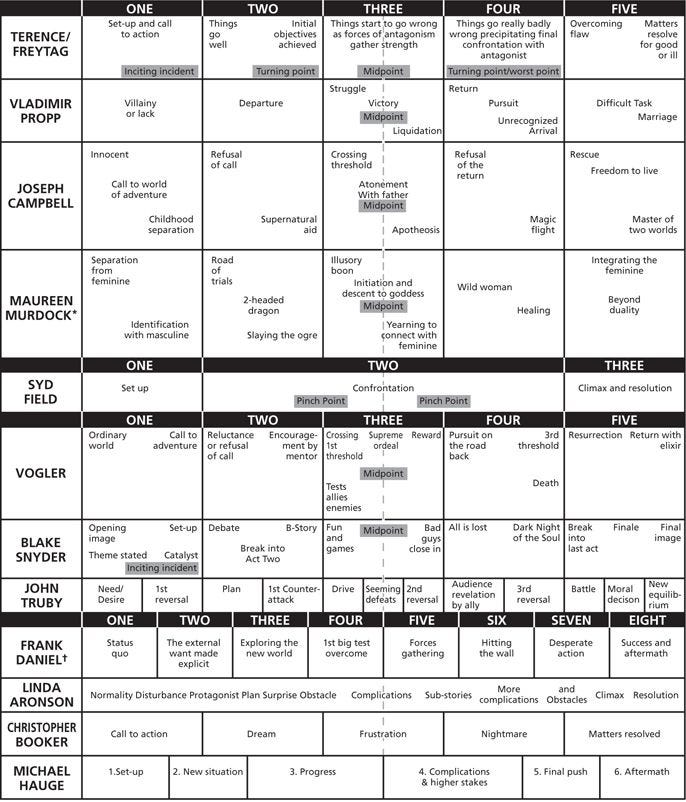
Incidentally, Joseph Campbell’s The Hero with a Thousand Faces, in which he describes his own interpretation of the hero’s journey, is often cited as George Lucas’s inspiration for Star Wars.
All of which I hope explains why my Jessica Taylor story above was worth telling: if all she’d said was “oh, you wrote that song? Great, thanks.” there wouldn’t have been a story at all. We didn’t quite have to face the “forces of antagonism” but we did resolve a misunderstanding.
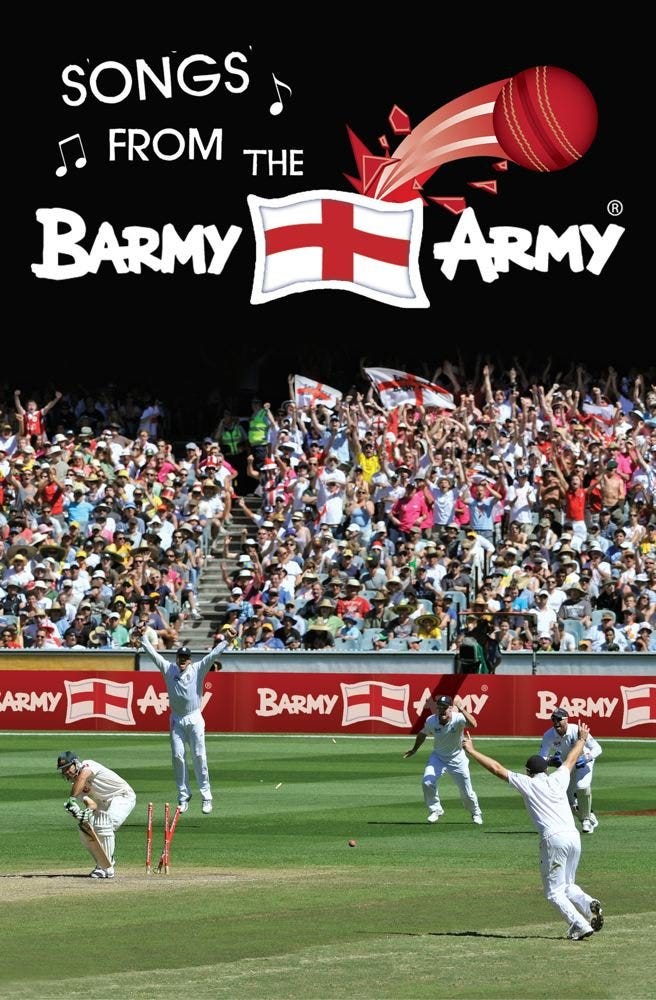
And if you want to know why I need to apologise to England bowling great Stuart Broad, you’ll have to read my story in Songs From the Barmy Army by Paul Winslow.
Member News
Congratulations to Caversham Writer ‘the Legend that is Richard Stephenson’ for having his short story “The Griffin on The Bridge” published in Worthing Flash.
Richard wrote the first draft of this story in The Griffin Pub in Caversham, at his first Caversham Writers event.
More poetry news and the next Dreading Slam is a week later than their usual first Sunday of the month due to Easter. The next one falls on Sunday April 12th, 7.30PM, at the Rising Sun Arts Centre.
Also delayed for Easter is their regular meal and open mic event at Tutu’s Ethiopian Table, now on Friday April 10th at 6.15PM. If you want to be on the Dreading Slam table for this one, check out the event details and sign up on their Meetup page.

Our Last Meeting
Write Night: Your Work in Progress
We welcomed two first-time attendees this week: Lisa from Rochester, Kent, and Rochelle from East London. You can find out more about Lisa and the books she has published on her website here. Rochelle writes poetry and fiction, you can also find her on Substack at Autumn The Sag. A warm welcome to both.
We also saw Ruta join us for the first time since last year with the exciting news that her YA novel is soon to be published. You can find pre-order details for Sheathed here.
There was plenty of P of the W at this week’s WIP writing session. From Izara and Amy getting 600-700 words out of their short stories to Stuart producing 1600 words for his novel, the word count was excellent.
But word count isn’t everything. A couple of members are in the editing phase of their WIP, with Abigail polishing her draft chapter by chapter and David rewriting his prologue. Moira found herself introducing a new surprise element to he romance novel while Louise talked about incorporating research from a forensic psychologist’s talk she just went to on serial killer behaviour.
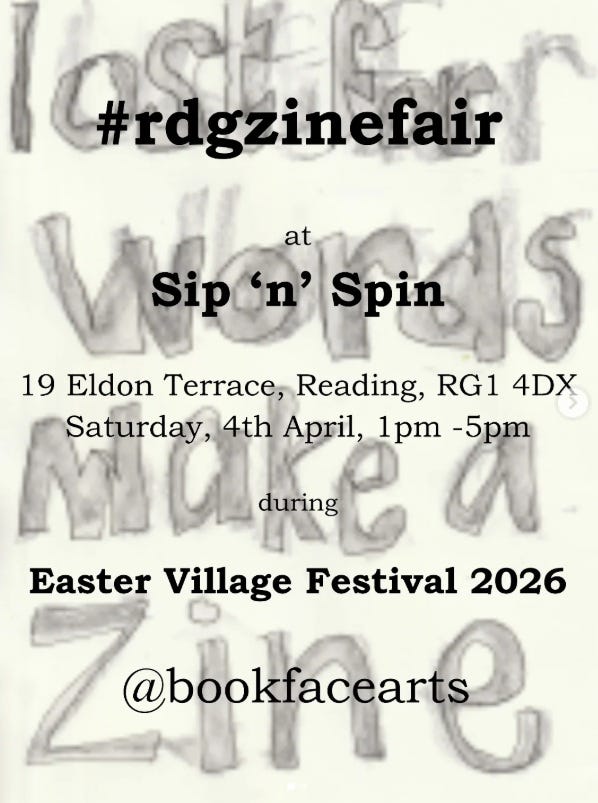
Richard made progress with his latest poem and Louisa continued work on her poetry zines, which reminds me - if you’re interested in finding out more about getting your work into the world in zine format, there’s a Zine Fair coming up in Reading on April 4th:
Next Week's Meeting
Prompt-Write Night (Online event)
Wednesday, March 25th · 7:00 PM to 9:00 PM GMT
Feeling stuck? Unblock yourself in this writing session where I set a prompt or theme for members to use as a jumping off point for an hour of writing. You can use it to write fiction or non-fiction, poetry or prose.
Amy is setting the prompt this time, let me know if you want to do so for future events, and I’ll put you on the list.
This event will be online via Zoom, register to attend on Meetup to get the link:
Free To Join, Free To Attend
As you know Caversham Writers is free to join and free to attend and I want it to remain so. That doesn’t mean it is free to run, though. I organise the group meetings on Meetup.com who have seen fit to double the fees paid by group organisers over the last year.
This has led to many groups shutting down or moving platform. I like to think of Caversham Writers as a local group with a global reach and I want us to remain open to voices from all over the world. Meetup provides that global reach so I intend to stay there, but would welcome any contributions toward the costs of running the group.
So if you enjoy this free newsletter and our weekly free events, please consider helping out by buying me a coffee at the link below.
I liked the Barmy Army version of yesterday .
Very interesting, as is Joseph Campbell's book, still being used and quoted years later. Some writers, like me, find it tricky to relate to graphs and worksheets that map out steps of a story or different structures. My mind starts to glaze over. I wonder if this is a left brain, right brain conundrum?